
Specialty billing
Podiatry Billing and Routine Foot Care Coverage
Routine foot care exclusions, class findings and the at-risk documentation that makes nail care payable.
The challenge
What makes podiatry billing different
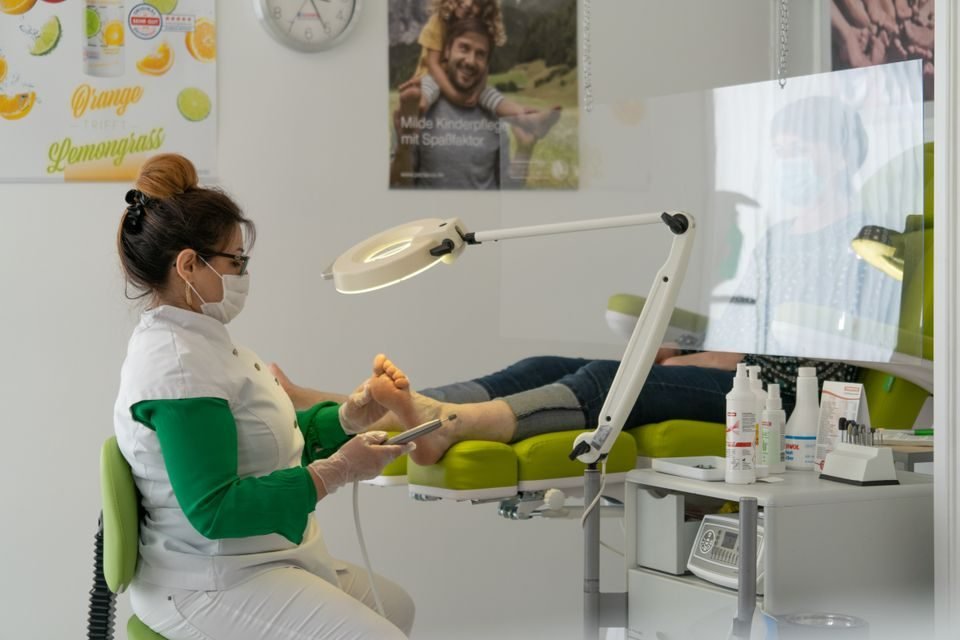
Podiatry carries a coverage exclusion that no other specialty has to work around quite so constantly. Routine foot care — nail trimming, callus and corn removal — is generally excluded from coverage unless the patient has a qualifying systemic condition that makes self-care hazardous, and unless the documentation proves it.
That proof is specific. It requires documented class findings, and in many cases evidence that the patient is under active care of a treating physician for the underlying condition within a defined timeframe. Practices that provide the care but do not capture the findings simply do not get paid for it.
Why us
Why podiatry practices work with us
Specialty billing is not a marketing label for us. Coders and A/R staff are assigned by specialty, so the person on your account reads notes like yours every day.
Get a free assessment- Class findings and qualifying conditions verified before the claim goes out
- Modifier selection matched to the documented severity, not applied by default
- Active care requirements confirmed with the treating physician where a payer requires it
- Surgical and wound care work coded alongside routine care without cross-contamination
Scope of work
What we handle for podiatry practices
The work below is specific to this specialty, not a generic billing checklist with the name swapped out.
Routine foot care qualification
Systemic condition, class findings and active care requirements verified before submission.
Class finding modifiers
Severity modifiers applied to match the documented findings rather than habitually.
Nail and callus debridement
Debridement coded to the number of structures treated, with mycosis documentation where required.
Diabetic foot and wound care
Ulcer treatment, debridement and offloading coded with the required depth and measurement detail.
Therapeutic footwear
Diabetic shoe and insert claims assembled with the certifying physician statement and prescription.
Foot and ankle surgery
Surgical procedures coded to the operative report with correct global period handling.
The Right Way difference
What we watch on podiatry claims
These are the details that separate a paid claim from an appealed one in podiatry. They are checked on every claim, not sampled.
- 01 Whether the systemic condition and class findings supporting routine foot care are actually documented
- 02 Active care timeframes with the treating physician, which several payers verify directly
- 03 Number of nails or lesions treated, which determines the code and the units billed
- 04 Mycosis documentation supporting debridement rather than trimming
- 05 Therapeutic shoe documentation, which requires a certifying statement from the managing physician
0+
Years running revenue cycles for physician practices
0+
Providers billed for across every specialty we serve
0%
First-pass clean claim rate
0 days
Median days in accounts receivable
Questions
Podiatry billing questions
What practices in this specialty ask us most often before making a change.
Ask us something elseNearly always documentation rather than coverage. The qualifying systemic condition, the class findings and, where required, the active care relationship all have to be present in the note. If any one is missing, the service reverts to a non-covered routine service.
Yes. These require a certifying statement from the physician managing the diabetes, a prescription, and documentation of the qualifying foot condition. The paperwork chain is the whole difficulty, and it is where these claims usually fail.
Yes. Foot and ankle surgery is coded from the operative report, with global periods tracked so post-operative visits are not billed separately and unrelated care within the period is modified correctly.
How it works
Getting started takes about a month
The same four steps whichever specialty you are in. No system migration and no gap in your cash flow.
-
01
Revenue assessment
We audit a sample of your claims, denials and aged A/R and show you what we found. Free, and yours to keep either way.
-
02
Scope and agreement
A written scope covering exactly which services we run, what it costs and what we are accountable for.
-
03
Access and onboarding
We set up inside your existing EHR and clearinghouse. Two to four weeks, run in parallel with your current process.
-
04
Live and reporting
We take over submission and follow-up, and you get monthly reporting you can actually act on.
Free consultation
Let us look at your podiatry claims
Send us a sample and we will tell you specifically what is being coded, denied or under-paid — and what it is worth to fix. Free, and yours to keep.