
Specialty billing
Urgent Care Billing at the Volume the Setting Actually Runs
High-volume episodic billing, urgent care specific codes and a self-pay share no other specialty carries.
The challenge
What makes urgent care billing different
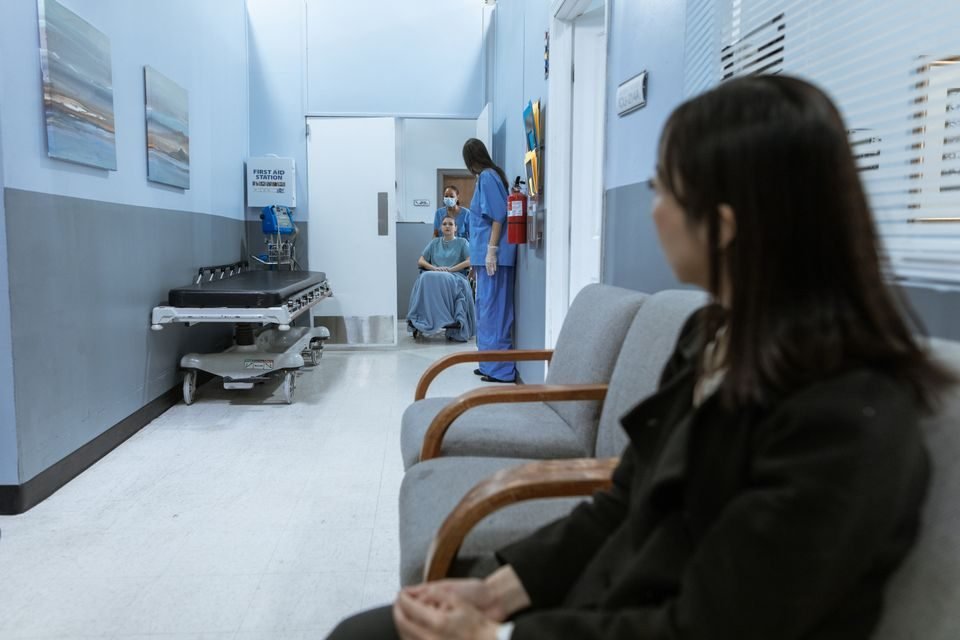
Urgent care is the highest-throughput outpatient setting in medicine, and it bills a patient population it will mostly never see again. There is no ongoing relationship to fall back on for collection, no established chart, and frequently no verified insurance beyond what was handed over at the front desk five minutes earlier.
It is also the setting where the largest share of patients pays out of pocket. That combination — high volume, episodic encounters and a heavy self-pay mix — means urgent care billing is judged on throughput and point-of-service collection far more than on complex coding.
Why us
Why urgent care centers work with us
Specialty billing is not a marketing label for us. Coders and A/R staff are assigned by specialty, so the person on your account reads notes like yours every day.
Get a free assessment- Same-day claim submission that keeps pace with actual patient volume
- Urgent care specific codes billed where the payer contract recognizes them
- In-house labs, imaging and procedures captured alongside the visit every time
- Point-of-service collection supported so balances do not walk out of the door
Scope of work
What we handle for urgent care centers
The work below is specific to this specialty, not a generic billing checklist with the name swapped out.
High-volume claim throughput
Same-day submission scaled to visit volume, so claim lag does not grow with a busy week.
Urgent care specific coding
Urgent care service codes applied where payer contracts recognize and reimburse them.
In-house labs and imaging
Point-of-care testing and radiographs captured with the visit rather than dropped from the claim.
Procedure capture
Laceration repair, splinting, foreign body removal and similar work billed alongside the E/M.
Occupational health billing
Employer-billed services, drug screens and injury care invoiced separately from insurance claims.
Self-pay and time-of-service
Transparent self-pay pricing and point-of-service collection support for uninsured patients.
The Right Way difference
What we watch on urgent care claims
These are the details that separate a paid claim from an appealed one in urgent care. They are checked on every claim, not sampled.
- 01 Correct place of service coding, which affects reimbursement and is easy to set wrongly by default
- 02 Whether payer contracts recognize urgent care specific codes or require standard office coding
- 03 Procedures and in-house diagnostics captured alongside the visit rather than lost in the rush
- 04 Insurance verified at the desk, since there is rarely a second chance to correct it
- 05 Employer and occupational health work invoiced separately rather than routed into insurance claims
0+
Years running revenue cycles for physician practices
0+
Providers billed for across every specialty we serve
0%
First-pass clean claim rate
0 days
Median days in accounts receivable
Questions
Urgent Care billing questions
What practices in this specialty ask us most often before making a change.
Ask us something elseYes. Urgent care is a throughput specialty and we staff accounts accordingly, with same-day submission as the standard. Claim lag that grows during your busy season is a capacity failure, and we plan for the peaks rather than the average.
Almost entirely at the front desk. Transparent pricing, a clear expectation set at registration and a card taken at the point of service outperform any amount of statement chasing afterwards, because after the visit you have no relationship left to work with.
Yes, and it needs to be kept separate. Employer-billed work, drug screens and injury care are invoiced directly to the employer rather than run through insurance, and mixing the two creates reconciliation problems quickly.
How it works
Getting started takes about a month
The same four steps whichever specialty you are in. No system migration and no gap in your cash flow.
-
01
Revenue assessment
We audit a sample of your claims, denials and aged A/R and show you what we found. Free, and yours to keep either way.
-
02
Scope and agreement
A written scope covering exactly which services we run, what it costs and what we are accountable for.
-
03
Access and onboarding
We set up inside your existing EHR and clearinghouse. Two to four weeks, run in parallel with your current process.
-
04
Live and reporting
We take over submission and follow-up, and you get monthly reporting you can actually act on.
Free consultation
Let us look at your urgent care claims
Send us a sample and we will tell you specifically what is being coded, denied or under-paid — and what it is worth to fix. Free, and yours to keep.